
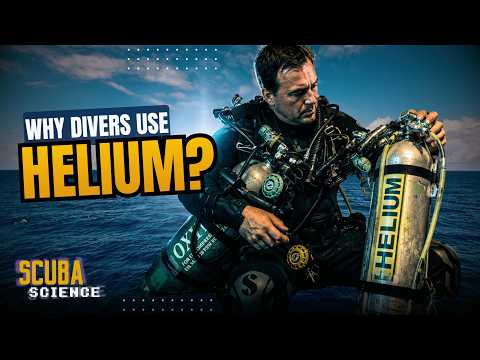
Why do deep divers use helium instead of air? In this SCUBA SCIENCE episode, we explore the physics and physiology behind helium diving, trimix, heliox, and other deep diving gas mixtures.
As divers descend deeper underwater, increased pressure changes how breathing gases affect the body. Nitrogen narcosis can impair judgment, oxygen can become toxic, and dense gas makes breathing more difficult. Helium helps solve many of these problems, which is why it has become a cornerstone of modern technical diving.
⌚ Chapters in this video:
00:00 Introduction
00:36 The Basics
02:42 Nitrogen Narcosis
04:15 Oxygen Toxicity
05:44 Why Helium?
08:01 High Pressure Nervous Syndrome HPNS
09:19 Trimix and Heliox
10:16 Disadvantages of Helium
11:50 Conclusion
Whether you’re interested in:
* Technical diving
* Deep wreck diving
* Cave diving
* Mine diving
* Diving physiology
* SCUBA science and training
this episode provides a clear, evidence-based explanation of why helium has become the preferred gas for deep exploration.
Subscribe for more SCUBA SCIENCE episodes covering decompression theory, gas physiology, underwater photography, cave diving, and the science behind safe diving practices.
Join this channel to support our SCUBA productions and get access to perks:
https://www.youtube.com/channel/UCkADALL6YXv8sMv2JCO8sXw/join
DiveSAGA ✨ All Access Members get:
🔊 Member shout-outs
🚩 Production Photos and status updates
🎶 Access to the DiveSAGA Soundtrack
🧪 Access to the SCUBA SCIENCE scripts
📄 Acces To DEEP DIVE Exclusive videos
🎙️ Listen and subscribe to the DiveSAGA Dive Debrief Podcast on Spotify:
Please visit my website to get more information: http://www.divesaga.com/
🔔𝐃𝐨𝐧’𝐭 𝐟𝐨𝐫𝐠𝐞𝐭 𝐭𝐨 𝐬𝐮𝐛𝐬𝐜𝐫𝐢𝐛𝐞 𝐭𝐨 𝐦𝐲 𝐜𝐡𝐚𝐧𝐧𝐞𝐥 𝐟𝐨𝐫 𝐦𝐨𝐫𝐞 𝐮𝐩𝐝𝐚𝐭𝐞𝐬.
https://www.youtube.com/@DiveSAGA/?sub_confirmation=1
✅ Important Links to Follow
📰 Read SAGA MAGAZINE
https://www.divesaga.com/magazine
📖 Get the BOOK "Career in SCUBA"
https://amzn.to/32kpaja
🔗 Stay Connected With Me.
Facebook: http://www.facebook.com/divesaga
Instagram: http://www.instagram.com/divesaga
TikTok: https://www.tiktok.com/@divesaga
Website: http://www.divesaga.com/
📩 For business inquiries: info@divesaga.com
=============================
🎬Suggested videos for you:
▶️ https://youtu.be/Tj7atB9hllc
▶️ https://youtu.be/hLb7Yx23VTQ
▶️ https://youtu.be/TiLmFTtY6C4
▶️ https://youtu.be/9z8W5Sox3_A
▶️ https://youtu.be/6x1k0Vw1LX0
▶️ https://youtu.be/G3cY0QT2cSE
▶️ https://youtu.be/PnFPiF_g2QI
▶️ https://youtu.be/Oe3OlP6Z8-s
▶️ https://youtu.be/RljqOptI0HM
▶️ https://youtu.be/6FbJCPFEVVA
▶️ https://youtu.be/AEQY2Re4Bpk
▶️ https://youtu.be/b3kQ17JCR6w
▶️ https://youtu.be/3syjvLOaz5M
▶️ https://youtu.be/JEptbzSKCxY
▶️ https://youtu.be/QhbRgP2RIWc
=================================
✅ About Dive SAGA – Scuba diving.
Welcome to Dive SAGA, your destination for world-class scuba diving adventures and education. Led by award-winning SCUBA instructor trainer Nick Derutter, this channel explores the depths of our planet through the lens of history, science, and travel. From cave diving, technical and wreck diving to ice diving and more, Dive SAGA is built for passionate divers.
Whether you’re a beginner dreaming of your first dive or an experienced diver looking to refine your skills, you’ll find value in every episode. Dive SAGA features expert equipment reviews, career insights for aspiring dive professionals, and immersive footage from some of the world’s most breathtaking underwater locations.
For Business inquiries, please use the contact information below:
📩 Email: info@divesaga.com
🔔 Love scuba diving, shipwrecks, and deep-sea adventures? Hit subscribe for expert tips, gear reviews, breathtaking footage, and epic dive stories.
https://www.youtube.com/@DiveSAGA/?sub_confirmation=1
=================================
#ScubaScience #TechnicalDiving #Trimix #HeliumDiving #DeepDiving #CaveDiving #WreckDiving #DiveTheory #Scuba #DiveSAGA
Keywords: helium diving, trimix diving, technical diving, deep diving, nitrogen narcosis, oxygen toxicity, HPNS, heliox, hydreliox, scuba science, cave diving, wreck diving, diving physiology, decompression, gas density.
