
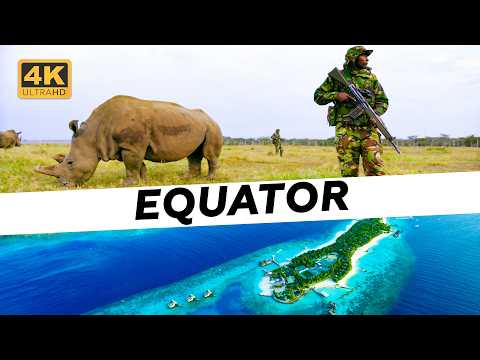
In science, the Equator is known as both the cradle of life and the museum of life,
because some 75 per cent of species arose there and most never went extinct.
In the calm, moist, warm equatorial lands, there’s nothing to stress animals– except, of course, humans. Traveling from Kenya to the Maldives to Tiputini, in Ecuador – said to be the most biodiverse place on Earth – this episode looks at how the fabulous diversity of the Equator is being saved. In some places, the job only requires a critter-cam, while, in others, it takes a
machine gun. On the plains of eastern Africa, where ivory-mad poachers roam and the last specimen of white rhinos lies on his death bed, only the most extreme measures will do.
0:00 The Cradle of Life
1:33 Kenya: The Last White Rhinos
4:33 Maldives: The Coral Doctors
8:25 Ecuador: Earth’s Most Biodiverse Place
12:21 Kenya: Sudan, the Last Male Rhino
15:56 Kenya: Guarding the Black Rhinos
17:53 Maldives: Rebuilding a Dying Reef
23:29 Ecuador: The Kichwa and the Living Forest
28:26 Kenya: Rangers on the Front Line
33:13 Ecuador: Oil, Camera Traps and Jaguars
37:59 Maldives: When the Coral Bleaches
41:07 A World Worth Fighting For
43:04 Kenya: Farewell to Sudan
—-
The universe is vast, much like our imagination. In "space and science", we show you various documentaries and highlights from outer space. No matter if stars or planets, meteoroids or black holes, relax and enjoy our content! 🙂
—-
Other channels you might be interested in:
criminals and crimefighters:
https://www.youtube.com/channel/UCYuXyzwA_w4-c1FJrqOnR0A
hazards and catastrophes:
https://www.youtube.com/channel/UC5WE_bClugxSVG1ENir8qzg
