
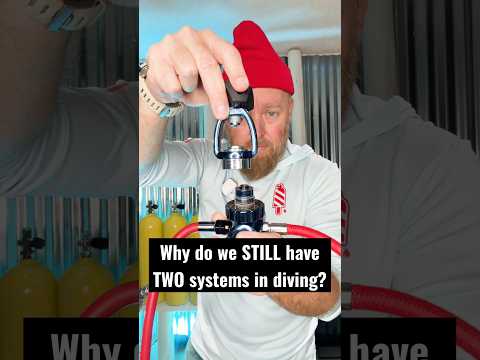
We have two main tank valve / 1st Stage configurations in scuba: DIN & Yoke.
DIN screws directly into the valve and captures the thicker O-ring inside a locked-in valve orifice. The yoke has the regulator opening rest in the valve face where the o-ring rests, and has a screw-in clamp and knob that wraps around the back of the valve.
The DIN is both preferred for Tech/Cave configurations and cold water diving due to a more streamlined setup, higher pressure capacity, and captured o-ring that is less prone to catastrophic failure/rupture. It also allows you to keep/check your-oring because it stays with the regulator, guaranteeing you have a good-ring, vs being at the mercy of a rental fleet.
Most agree DIN is both safer, more capable, and more streamlined, but Yoke is extremely prevalent, especially in the Americas, Australia, and other regions.
While there are no real advantages to Yoke (some argue the handle knob is a little easier, but some argue the opposite), Yoke valves are more common in most tourist locations, so traveling makes DIN less common and often creates a layer of hassle. Fortunately, a DIN can easily be adapted to a Yoke style tank valve with a small adapter (shown). Conversely, a Yoke can adapt to a DIN tank with a small insert. Fortunately, most newer tank valves come with the “pro valve” that allows adapting to either. Is there a realistic solution to this? Should we phase out new production of Yoke starting at a certain date? Or is this a 2-tier system we are doomed to deal with forever?
🤿🔧
#techdiving #scubatank #divetravel #divemasterlife
