
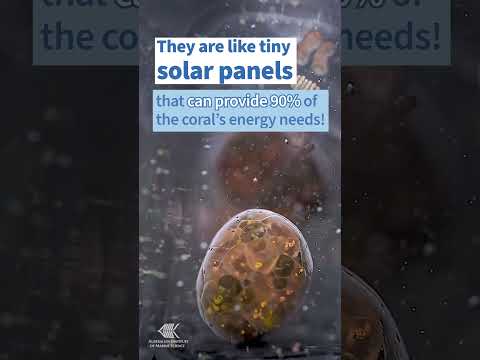
Coral reefs are famous for their biodiversity. But do you ever think about the life we can’t see? 🦠🪸
Thousands of different types of tiny microbes interact with corals every day. They live in the seawater, inside coral mucus, and even inside coral cells.
Microbes are critical to coral survival. Some help corals grow, reproduce and recycle waste.
The most famous are microalgae called zooxanthellae. They work like tiny solar panels, providing 90% of the coral’s energy needs. Coral polyps in turn provide the microalgae with protection and shelter.
The breakdown of this symbiotic relationship – usually under extreme changes in heat or salinity – results in the zooxanthellae being ejected. This is when corals turn white, and ‘bleach’. If conditions quickly return to normal, zooxanthellae may return. Otherwise the corals will die.
This process is vital for the future of coral reefs in our warming ocean.
AIMS scientists are investigating how to make corals more tolerant to heat.
🦠🌡️ We are looking at all the types of zooxanthellae to study how well they cope with heat stress.
🦠🌡️ We are also cultivating zooxanthellae at higher temperatures to increase their tolerance.
The findings can aid reef restoration and help corals cope with marine heatwaves.
Want to know more, here’s some further reading on the AIMS website.
AIMS work to enhance the resilience of corals:
https://www.aims.gov.au/research-topics/environmental-issues/climate-change/assisted-evolution
A general introduction to coral:
https://www.aims.gov.au/research-topics/marine-life/corals
The role of zooxanthellae in coral bleaching:
https://www.aims.gov.au/research-topics/environmental-issues/coral-bleaching/what-coral-bleaching
🎥 Daniel Stoupin
