The corals from both November and December’s mass spawning events will soon be starting a new life on the Great Barrier Reef!
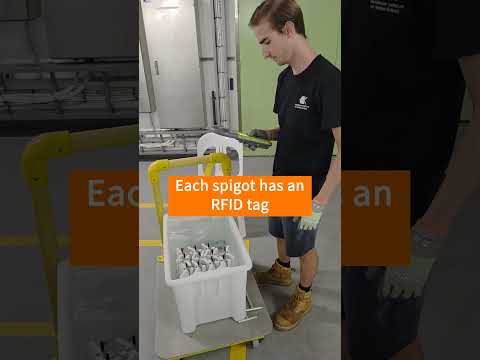
The older corals are already out on the Reef, with December’s babies getting ready to go. Together with our partners in the Reef Restoration and Adaptation Program, we have developed special coral seeding devices which give them the best chance of surviving the initial stages of their life in the ocean.
📽️ Watch the video to see the various steps of seeding device assembly.
This season, working with our research and industry partners, we have already delivered over 16,000 devices from SeaSim to the Keppel Islands in the southern Great Barrier Reef. The aim is to send double that to northern parts of the Reef in January.
All in all, that’s well over a million baby corals reared and deployed from the SeaSim alone.
It’s a huge amount of effort from the team, which we’re working to support with more machine automation as we further scale up operations. And that’s just part of the ongoing efforts of the Pilot Deployments Program, one of the largest reef restoration trials ever undertaken.
👀 Learn more here: https://www.aims.gov.au/research-topics/environmental-issues/climate-change/reef-restoration-and-adaptation-program/pilot-deployments-program
The Pilot Deployments Program is funded by the Australian Government’s Reef Trust (Department of Climate Change, Energy, the Environment and Water), and led by the Australian Institute of Marine Science. It is part of the Reef Restoration and Adaptation Program, funded by the partnership between the Reef Trust and the Great Barrier Reef Foundation.
